
7 Signs You Need a Tree Arborist Sydney Consult for Your Property
What Are The Signs That Indicate Tree Health Issues?
Unusual leaf behavior—including wilting, curling, or unexpected color changes—often signals serious tree health problems requiring professional attention. When leaves display these symptoms outside normal seasonal patterns, your tree may be struggling with disease, pest infestation, or environmental stress.
Healthy trees maintain consistent foliage throughout their growing season. Leaves that suddenly wilt despite adequate rainfall indicate potential root damage or vascular disease blocking water transport. Curling leaves often point to pest activity, fungal infections, or nutrient deficiencies affecting the tree’s ability to photosynthesize properly.
Color changes deserve immediate attention when they occur at unusual times. Premature yellowing in spring or summer suggests nitrogen deficiency or root rot, while brown, scorched edges can indicate salt damage or drought stress. Spotted or blotchy discoloration frequently reveals fungal diseases spreading through the canopy.
These visible symptoms represent your tree’s distress signals. The underlying causes may include:
- Root system damage from construction, compaction, or disease
- Vascular diseases like verticillium wilt blocking nutrient flow
- Pest infestations such as scale insects or borers
- Environmental stress from drought, flooding, or soil pH imbalances
- Fungal infections attacking leaves or internal tissues
Early detection makes the difference between saving a valuable tree and facing costly removal. When you notice persistent unusual leaf behavior across multiple branches, scheduling a tree arborist Sydney consult protects your property investment and prevents potential safety hazards from declining tree health.
How Do Cracks Or Splits In The Tree Trunk Affect Tree Stability?
Trunk cracks compromise a tree’s structural integrity and can lead to sudden failure, especially during storms or high winds. These visible fissures indicate the tree has lost its ability to support its own weight safely, creating immediate risks to nearby structures, vehicles, and people.
Identifying Different Types of Trunk Damage
Tree trunk problems such as vertical cracks running along the grain often result from rapid temperature changes or frost damage, particularly affecting smooth-barked species like eucalypts. Horizontal or diagonal splits typically signal more serious problems, including internal decay or severe structural weakness that requires urgent attention.
Seams that separate the bark from the wood beneath expose the tree’s vascular system to pathogens and pests. Deep crevices that penetrate beyond the outer bark layer indicate the damage has reached critical support tissues, severely limiting the tree’s ability to transport water and nutrients.
Safety Risks From Compromised Tree Structure
Trees with significant trunk cracks can split without warning, dropping massive sections of wood that cause catastrophic property damage or injury. The structural weakness spreads as cracks widen over time, making the entire tree increasingly unstable even if it appears healthy from a distance.
Large splits create pivot points where the trunk can snap during moderate weather events. Sydney’s strong coastal winds place additional stress on damaged trunks, accelerating failure rates compared to trees in sheltered locations.
Root Causes Behind Trunk Splitting
Tree disease frequently manifests as trunk cracks when fungal infections or bacterial cankers destroy internal wood tissue. Pathogens enter through wounds and spread through the cambium layer, creating hollow sections that eventually cause the outer trunk to fracture under stress.
Physical trauma from:
- Lightning strikes that superheat internal moisture
- Construction equipment impacts during nearby building work
- Improper pruning cuts that create stress points
- Vehicle collisions or vandalism damage
Poor growing conditions contribute to trunk failure when trees develop included bark—weak unions where branches attach improperly to the main stem. Drought stress causes rapid shrinkage of wood cells, leading to separation cracks that worsen during subsequent wet periods when the wood swells unevenly.
Why Should Dead Or Falling Branches Prompt A Tree Arborist Consult?
Dead branches and falling branches create immediate safety hazards that demand professional attention. These limbs can drop without warning, potentially injuring people below or causing significant property damage to vehicles, roofs, fences, and outdoor structures.
The unpredictability of branch failure makes this particularly dangerous. A branch may appear stable for weeks before suddenly breaking during mild weather conditions. Weight from the branch itself, combined with factors like wind, rain, or even bird activity, can trigger unexpected falls.
Dead branches signal deeper problems within the tree’s vascular system. When a tree stops sending nutrients to specific branches, it indicates:
- Water stress from inadequate root function
- Disease affecting the tree’s circulatory pathways
- Pest infestations compromising internal health
- Root damage preventing proper nutrient distribution
Trees naturally shed some branches as part of their growth cycle, but excessive branch death points to systemic distress. A healthy tree maintains its canopy and only drops small twigs occasionally. Multiple dead or dying branches across different sections of the canopy suggest the tree is struggling to sustain itself.
The location of dead branches provides diagnostic clues. Branches dying from the top down often indicate root problems or water stress. Branches failing on one side may signal localized damage or disease. Random branch death throughout the canopy can point to pest infestations or systemic disease.
Professional arborists assess the extent of branch death and identify underlying causes. They examine bark texture, check for insect activity, test branch flexibility, and look for signs of disease progression. This assessment determines whether the tree can recover with treatment or poses ongoing risks requiring removal.
Waiting to address falling branches increases liability exposure. Property owners may face legal responsibility if a known hazardous branch injures someone or damages neighboring property. Documentation from an arborist consultation provides evidence of responsible property management.
What Does The Presence Of Fungus Or Mushrooms At The Tree Base Mean?
Fungal growth at the base of your tree signals serious internal problems that aren’t visible from the outside. Mushrooms sprouting around the trunk or roots indicate active decay within the tree’s structure, compromising its strength and stability.
Mushrooms on trees act as the fruiting bodies of fungi that have already colonized the wood inside. The visible mushroom represents only a small portion of the fungal network—by the time you spot them, extensive internal decay has likely progressed for months or years. This hidden deterioration weakens the tree’s structural integrity from within.
Different fungi target specific parts of trees:
- Root rot fungi attack underground systems, destabilizing the entire tree
- Heartwood decay fungi hollow out the central trunk, reducing load-bearing capacity
- Sapwood fungi compromise the tree’s ability to transport water and nutrients
The location of fungal growth provides diagnostic clues. Mushrooms clustered at the base often indicate root disease or basal rot, while fungi higher on the trunk suggest wounds or branch stubs that allowed infection. Shelf-like bracket fungi clinging to bark typically mean advanced wood decay.
Sydney’s humid climate creates ideal conditions for fungal proliferation, making early detection critical. Trees may appear healthy above ground while fungi systematically destroy their foundation. Root systems can lose 50-70% of their structural capacity before external symptoms become obvious.
Professional arborists use specialized tools to assess decay extent. Resistograph drills measure wood density, sonic tomography maps internal cavities, and visual tree assessment protocols evaluate risk factors. These diagnostic methods reveal what lies beneath the bark.
Treatment options depend on decay severity and location. Early intervention might involve:
- Removing infected wood and improving drainage
- Applying fungicidal treatments to slow progression
- Installing support systems for compromised structures
- Adjusting soil conditions to discourage fungal growth
Advanced decay often leaves removal as the safest option. An arborist evaluates whether the tree poses imminent danger to people, buildings, or power lines. This assessment considers wind exposure, lean angle, and proximity to high-traffic areas.
Ignoring mushrooms on trees risks catastrophic failure. Decayed trees can become unstable during storms or high winds, posing significant hazards. Regular inspections by qualified professionals are essential for maintaining tree health and mitigating risks associated with fungal infections.
See Also : Tree Removal Services: What to Expect and How to Prepare
When Are Exposed Or Damaged Roots A Cause For Concern?
Exposed roots become a concern when they lift pavement, crack driveways, or damage underground infrastructure like water pipes and sewer lines. These visible root systems indicate the tree is searching for nutrients and water, often due to compacted soil or limited growing space.
Structural damage from roots extends beyond cosmetic issues. When roots push through concrete or wrap around pipes, they create costly repair scenarios for property owners. The pressure exerted by growing roots can crack foundations, buckle footpaths, and compromise underground utilities.
How Compromised Roots Threaten Tree Health
Damaged roots directly impact a tree’s ability to absorb water and nutrients from the soil. When roots are severed during construction work or become diseased, the tree loses its primary support system. This creates tree stability issues that can lead to unexpected collapse during storms or high winds.
Root damage manifests in several ways:
- Anchor loss: Severed or decayed roots reduce the tree’s grip in the soil
- Nutrient deficiency: Compromised root systems cannot transport essential minerals to the canopy
- Water stress: Damaged roots struggle to supply adequate moisture during dry periods
- Increased vulnerability: Weakened trees become susceptible to pest infestations and diseases
Signs Your Tree Has Root Problems
Surface roots that suddenly appear above ground often signal soil erosion or compaction issues beneath. Trees planted too deeply may develop girdling roots that wrap around the trunk base, slowly strangling the tree’s vascular system.
Visible root decay appears as soft, spongy tissue or dark discoloration at the base. These symptoms require immediate professional assessment, as root rot spreads quickly through the root system and into the trunk.
The Hidden Danger of Root Plate Failure
The root plate—the mass of roots and soil at a tree’s base—provides crucial stability. When this system becomes compromised through exposed roots or damage, the entire tree becomes a hazard. Root plate failure typically occurs without warning, making professional evaluation essential for trees showing any root distress.
Construction activities pose particular risks to established trees. Excavation within a tree’s critical root zone can sever major structural roots, creating instability that may not become apparent until years later.
Other Resources : Horticulture – Pruning and tree surgery
How Can Leaning Trees Or Overgrown Branches Impact Your Property?
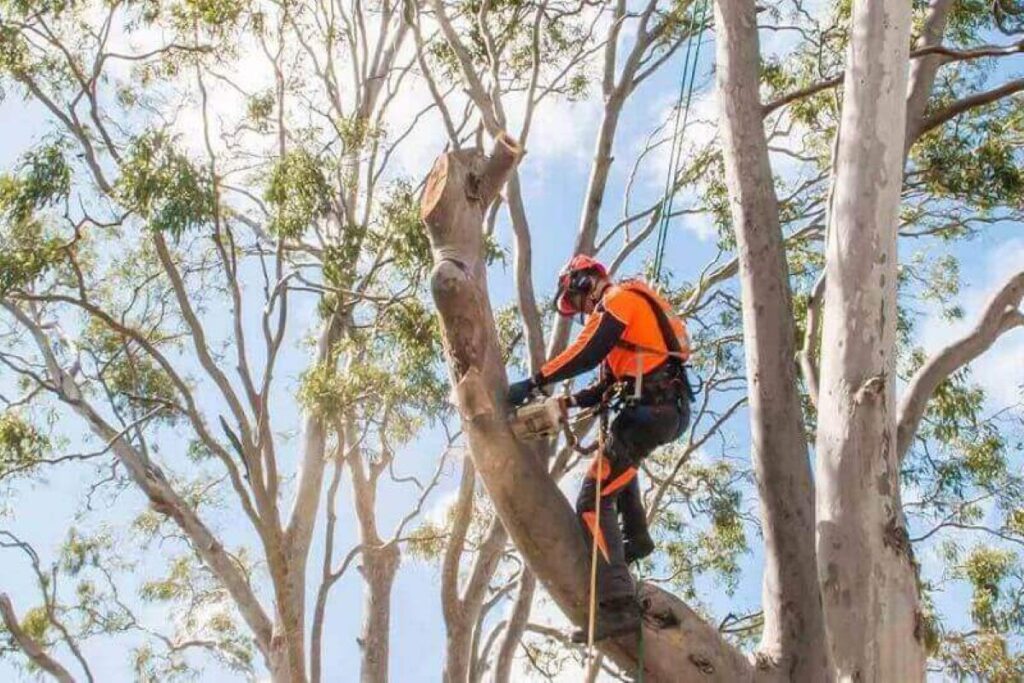
Leaning trees on Sydney properties pose specific dangers, especially when they lean towards buildings, fences, or power lines. A tree that leans more than 15 degrees from being upright usually has weak roots or structural problems, making it likely to fall during storms or strong winds.
Understanding the Risks of Leaning Trees
The direction in which a tree leans is crucial in assessing the level of danger it presents:
- Trees leaning towards your home pose an immediate threat to your roof, windows, and the people inside.
- If a tree leans towards a neighbor’s property, you may be held responsible for any damage it causes.
- Trees leaning close to power lines can cause electrocution hazards and may lead to widespread power outages affecting entire streets.
The Threats Posed by Overgrown Branches
Overgrown branches that extend beyond the natural reach of the tree can create various risks for your property:
- Structural contact: Branches rubbing against roofs can damage protective layers and allow water to seep in.
- Gutter blockage: Overhanging limbs drop debris that clogs drainage systems.
- Window hazards: Heavy branches positioned above windows can break glass during windy conditions.
- Vehicle damage: Limbs hanging over driveways and parking areas pose a risk to cars with falling debris.
The Impact of Coastal Winds and Summer Storms
Sydney’s coastal winds and summer storms put extra pressure on trees that are not balanced. When a tree has excessive growth on one side, it becomes unevenly weighted and starts to lean. Strong winds combined with heavy leaves create a sail effect, pulling the entire tree in the direction where there is more resistance.
The Role of Professional Arborists
Professional arborists use specialized tools to measure how much a tree leans and decide if corrective actions can be taken to stabilize it or if removal is necessary. They also examine the soil around the roots for signs of lifting or gaps that indicate the tree is already starting to uproot.
Techniques Used by Arborists
Here are some techniques used by arborists to address leaning trees:
- Crown reduction pruning: This technique involves removing weight from specific areas of the tree’s crown to redistribute balance.
- Cabling and bracing systems: These provide support for trees with historical or aesthetic value that need preservation.
It’s important to note that these interventions require precise calculations of how much weight the tree can bear and proper installation methods that only certified professionals know.
The Dangers of DIY Pruning
Trying to prune large overgrown branches on your own can actually make things worse. Here are some potential consequences:
- Improper cuts can create openings for diseases to enter the tree.
- Removing too many leaves at once can shock the tree and cause it to decline.
It’s best for homeowners working near leaning trees or overgrown branches to seek professional help instead of attempting DIY solutions.
What Should You Do After Storm Damage Or Sudden Leaf/Bark Loss?
After severe weather affects your trees, it’s crucial to assess the situation immediately. Storm damage to trees on Sydney properties can vary from broken branches and split trunks to complete uprooting. This damage can create immediate dangers for people, vehicles, and buildings below.
Sydney’s intense storms bring strong winds, heavy rain, and occasional hail that put stress on trees beyond their structural limits. Broken limbs hanging dangerously in the canopy pose serious risks as they can fall unexpectedly days or weeks after the initial storm event. Trees may also experience sudden leaf loss when winds blow leaves off prematurely, or bark may come off trunks due to impact damage.
Recognizing Critical Storm Damage
Here are some visible signs that require urgent attention:
- Hanging branches: These are branches caught in the canopy or suspended by strips of bark.
- Crown twist: This occurs when the top of the tree has rotated due to wind force.
- Bark stripping: This is when bare wood along the trunk is exposed because the bark has been stripped away.
- Root plate lifting: This happens when soil heaves upward at the base of the tree.
- Sudden foliage loss: This affects entire sections of the tree’s canopy.
Trees that suddenly lose their leaves may be responding to root damage beneath the surface of the soil. When storms sever roots, it shocks the tree and causes it to drop its leaves early as a way to reduce water needs that it can no longer meet.
Why Prompt Professional Assessment Matters
Delaying action on storm damage significantly increases risks. What seems stable right after a storm may quickly worsen as damaged wood dries out and weakens. An arborist consultation within 24-48 hours can identify hidden structural issues that untrained eyes might miss.
A professional evaluation will determine whether damaged trees can recover with proper care or if they need to be removed to prevent future failure. Arborists will look at how much of the crown is lost, check for internal splitting, and assess the health of the root system in order to create effective recovery plans.
7 Signs You Need a Tree Arborist Sydney Consult for Your Property include post-storm situations where trees show any combination of broken limbs, bark damage, or unexpected leaf loss. These symptoms often indicate multiple points of failure that require specialized equipment and expertise to address safely.
Why Is Hiring A Certified Arborist Essential For Tree Care In Sydney?
Certified arborists in Sydney have specialized training through accredited programs that cover tree biology, disease diagnosis, proper pruning techniques, and risk assessment methods. Unlike general landscapers, these professionals complete rigorous coursework and practical examinations to earn credentials from recognized bodies like the International Society of Arboriculture (ISA) or Arboriculture Australia.
Their expertise goes beyond basic tree maintenance to understanding complex interactions between soil conditions, pest infestations, and structural integrity. Certified professionals can identify early warning signs that untrained eyes miss, such as subtle bark discoloration indicating vascular disease or minor trunk swelling suggesting internal decay.
Comprehensive Services That Protect Your Property
Professional tree services deliver solutions tailored to each tree’s specific needs and your property’s unique circumstances:
- Precision pruning that maintains tree health while enhancing structure and appearance
- Safe tree removal using specialized equipment and techniques for hazardous or unwanted trees
- Emergency response for storm-damaged trees threatening structures or blocking access
- Detailed council reports documenting tree condition and justifying necessary work for local regulations compliance
- Stump grinding to eliminate tripping hazards and reclaim usable space
- Risk assessments evaluating potential dangers from aging or compromised trees
Each service follows industry best practices that prioritize both tree preservation and property safety. Arborists use proper cutting angles, appropriate timing for seasonal work, and species-specific approaches that DIY attempts typically overlook.
The Hidden Costs of Amateur Tree Work
Attempting tree maintenance without proper training creates multiple risks that far exceed the cost of hiring professionals. Incorrect pruning cuts create entry points for pathogens, potentially killing healthy trees worth thousands of dollars. Poor technique can cause trees to develop weak branch structures that fail years later during storms.
Safety hazards multiply when untrained individuals work near power lines or attempt to fell large trees without understanding weight distribution and fall patterns. Sydney property owners face potential liability if DIY tree work causes injury to others or damages neighboring properties.
Local regulations compliance requires specific documentation and approval processes that certified arborists navigate routinely. Working on protected trees without proper permits can result in substantial fines—some Sydney councils impose penalties
How Do Sydney Arborists Support Property Owners During Emergencies And Regulatory Challenges?
Emergency Response to Hazardous Situations
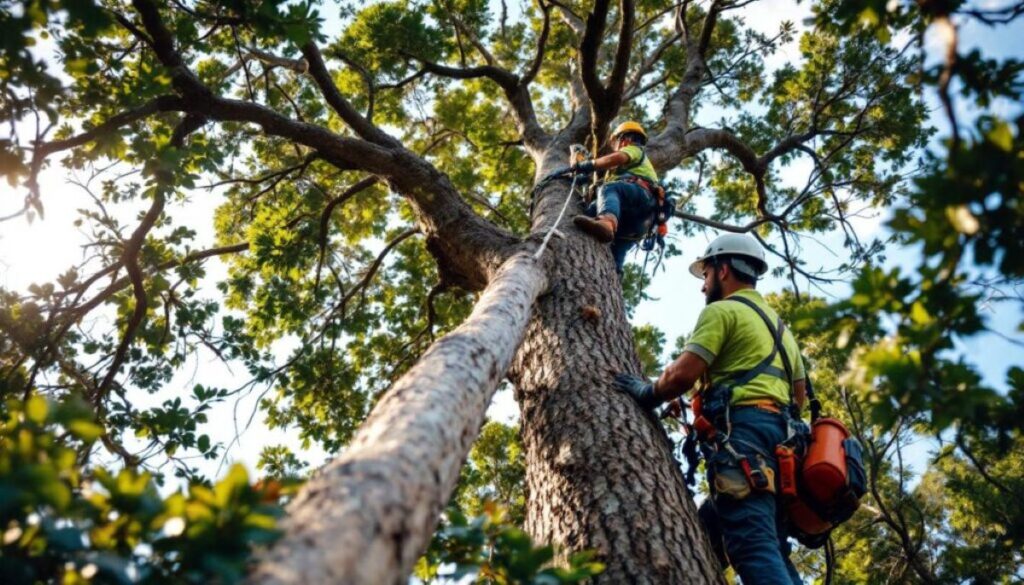
Sydney arborists provide 24/7 emergency tree care Sydney services to address hazardous situations immediately after severe weather events. When storms strike, fallen branches or unstable trees threaten homes, vehicles, and power lines, requiring urgent professional intervention.
Emergency response teams arrive equipped to handle dangerous scenarios safely. They assess structural damage, remove fallen limbs blocking access, and secure compromised trees that could collapse. These specialists work through night hours when most storm damage occurs, preventing injuries and property destruction.
Navigating Tree Preservation Laws
Tree preservation laws Sydney impose strict regulations on removing or pruning trees, particularly protected species and those in heritage areas. Property owners face substantial fines for unauthorized work, making professional guidance essential. Arborists navigate complex council requirements, determining which trees need permits and preparing documentation for approval.
The regulatory support includes:
- Conducting detailed tree assessments and risk evaluations
- Preparing arborist reports that meet council specifications
- Submitting development applications for tree removal or significant pruning
- Liaising with local authorities on behalf of property owners
- Advising on alternatives to removal that satisfy preservation requirements
Sydney councils often mandate arborist reports before approving work on significant trees. These reports document tree health, structural integrity, and justification for proposed actions. Certified professionals understand what councils require, streamlining the approval process.
Preventing Emergencies and Regulatory Violations
Recognizing the 7 Signs You Need a Tree Arborist Sydney Consult for Your Property prevents emergencies and regulatory violations. Early professional assessment addresses problems before trees become hazardous or require removal, often preserving valuable specimens while maintaining compliance.
Arborists familiar with Sydney’s climate conditions and native species provide tailored advice. They understand which trees adapt to local weather patterns and soil types, recommending maintenance strategies that promote long-term health. This expertise proves invaluable when balancing property safety with environmental preservation obligations.